
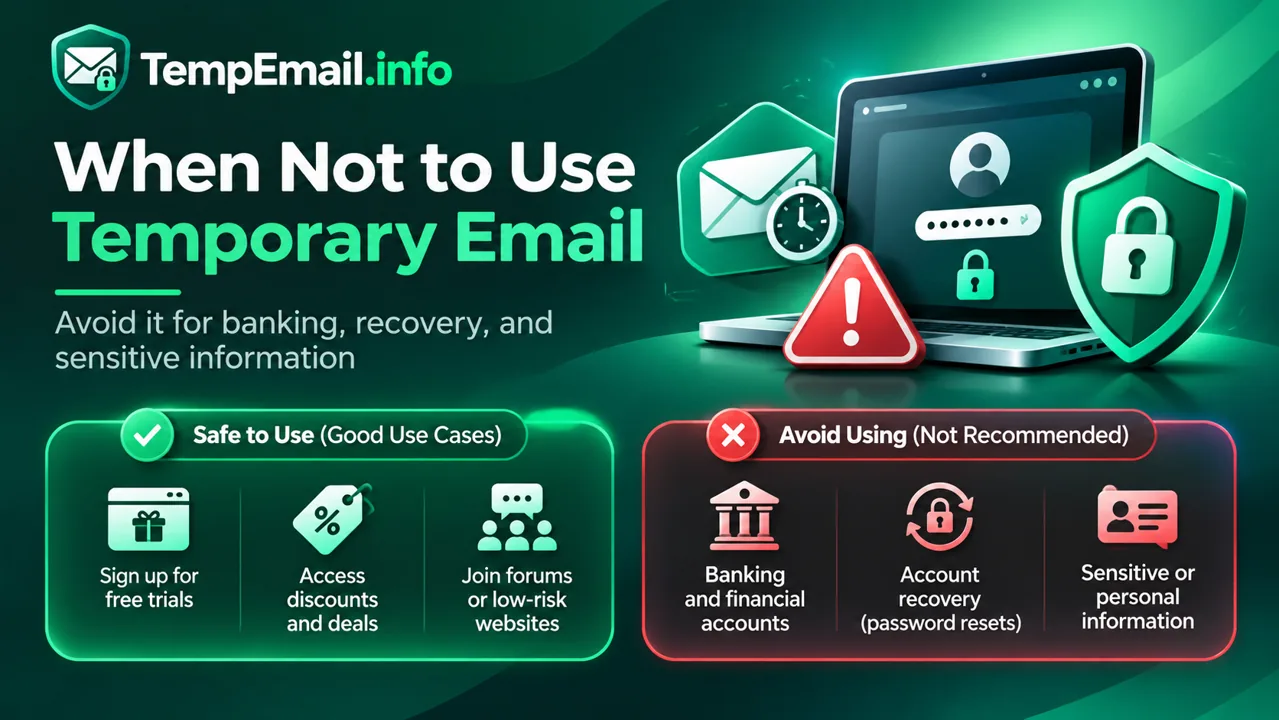
Know the trade-offs before trusting a temporary mailbox. This guide explains the practical trade-offs so you can choose a method that fits the importance of your messages.
Why this matters
Disposable addresses are convenient for short tasks, but they may be blocked by some services. Providers can restrict disposable domains, and receiving capacity may vary.
What to consider
A temporary mailbox may expire before you need a password reset. Some services also expose inboxes through public or shareable links, so confidentiality cannot be assumed.
How to make a safer choice
Temporary email does not hide your IP address, browser fingerprint, payment details, or account activity. It should not be described as complete anonymity.
Practical checklist
Avoid sensitive documents; do not rely on it for recovery; check the expiry period; use a permanent mailbox for anything valuable or long-term.
What to do next
Start with one small improvement rather than changing every address at once. For an account you plan to keep, use a dependable private mailbox with recovery options. For a short-lived, non-sensitive test, you can consider a temporary inbox after checking its availability and expiry rules. Learn more in our temporary email basics guide and spam reduction guide.
Reminder: Do not use a disposable mailbox for banking, health records, legal documents, or long-term account recovery.