
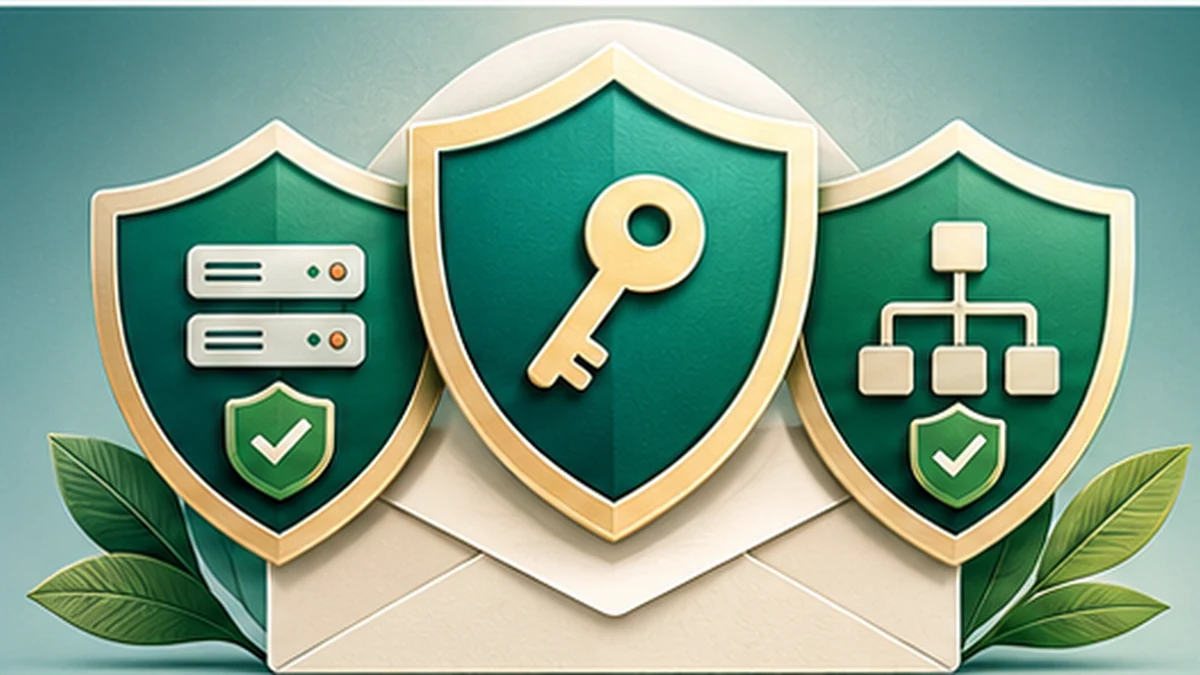
Understand the three DNS controls that help receivers assess email authenticity. This guide explains the practical trade-offs so you can choose a method that fits the importance of your messages.
Why this matters
SPF lists servers permitted to send mail for a domain. It is checked against the envelope sender, so a visible From address alone does not tell the whole story.
What to consider
DKIM attaches a cryptographic signature to a message. A receiver uses a public key published in DNS to check whether signed content was altered in transit.
How to make a safer choice
DMARC connects authentication results with the visible From domain and lets domain owners publish a policy and receive reports. None of these controls guarantees that every legitimate message will arrive.
Practical checklist
Inventory all legitimate senders before changing DNS; enable DKIM for each service; monitor DMARC reports; move to stricter policies only after validating normal traffic.
What to do next
Start with one small improvement rather than changing every address at once. For an account you plan to keep, use a dependable private mailbox with recovery options. For a short-lived, non-sensitive test, you can consider a temporary inbox after checking its availability and expiry rules. Learn more in our temporary email basics guide and spam reduction guide.
Reminder: Do not use a disposable mailbox for banking, health records, legal documents, or long-term account recovery.