
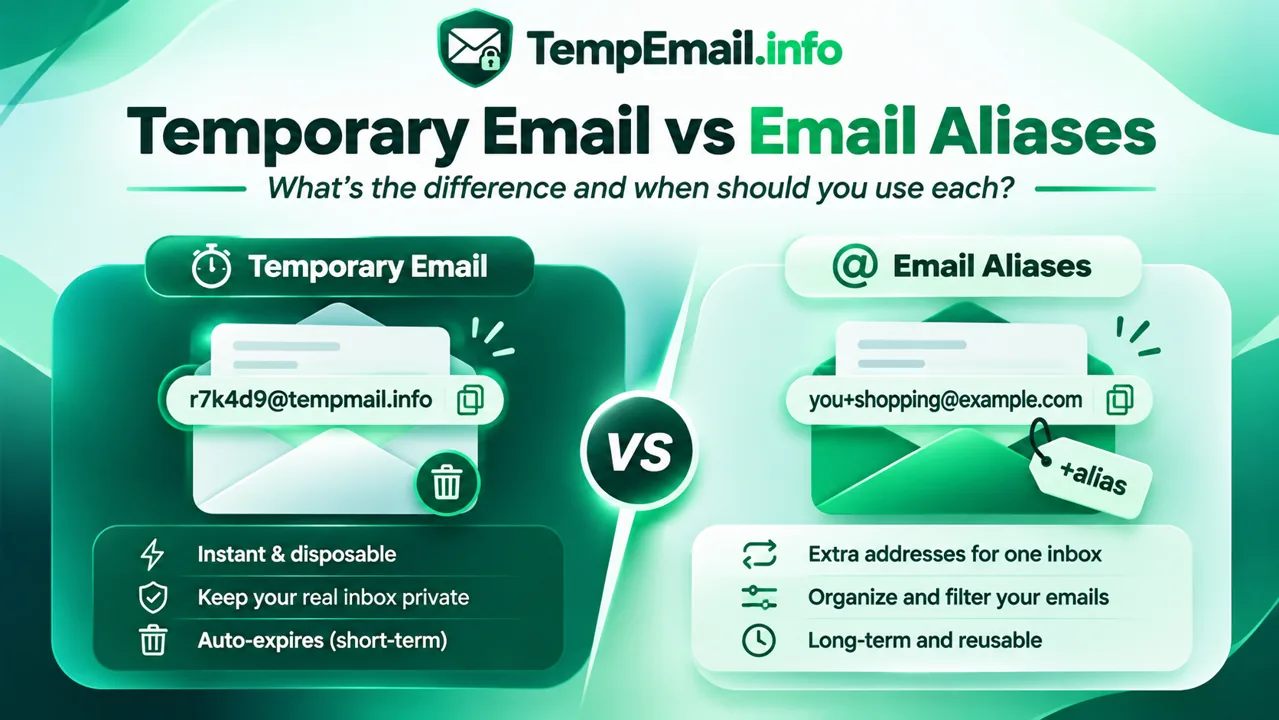
Compare long-lived aliases with short-term mailboxes and choose the right tool. This guide explains the practical trade-offs so you can choose a method that fits the importance of your messages.
Why this matters
An alias forwards messages to a mailbox you already control. It is useful when you need a stable address but want the option to disable a particular sender later.
What to consider
A temporary inbox usually expires or has limited availability. It is better for a one-off, non-sensitive test than for an account you plan to maintain.
How to make a safer choice
Before choosing, ask whether you will need password resets in six months, whether the address is private, and whether the receiving provider supports the domain. An alias is often the safer default for subscriptions you might keep.
Practical checklist
Create separate aliases for shopping and newsletters; reserve temporary mail for short experiments; review which addresses you still need every quarter.
What to do next
Start with one small improvement rather than changing every address at once. For an account you plan to keep, use a dependable private mailbox with recovery options. For a short-lived, non-sensitive test, you can consider a temporary inbox after checking its availability and expiry rules. Learn more in our temporary email basics guide and spam reduction guide.
Reminder: Do not use a disposable mailbox for banking, health records, legal documents, or long-term account recovery.